

Pediatrician in Sharjah
Specialists
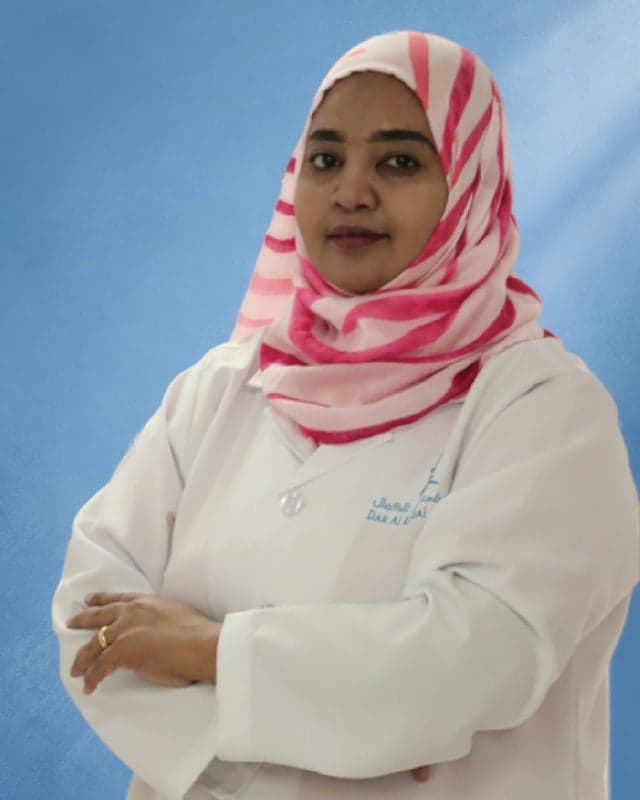 Dr. Aya OsmanBook appointment
Pediatric Specialist
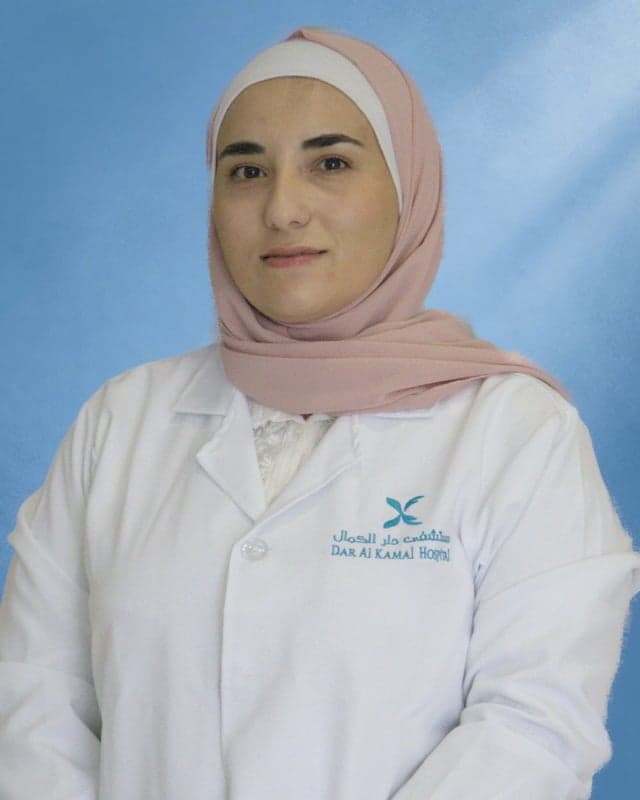 Dr. Eman IbrahimBook appointment
General Practitioner, Pediatrics
 Dr. Mohammad TehraniBook appointment
Specialist Pediatrics & Neonatologist
 Dr. Mohammadreza KhalilianBook appointment
Specialist Pediatric Cardiology
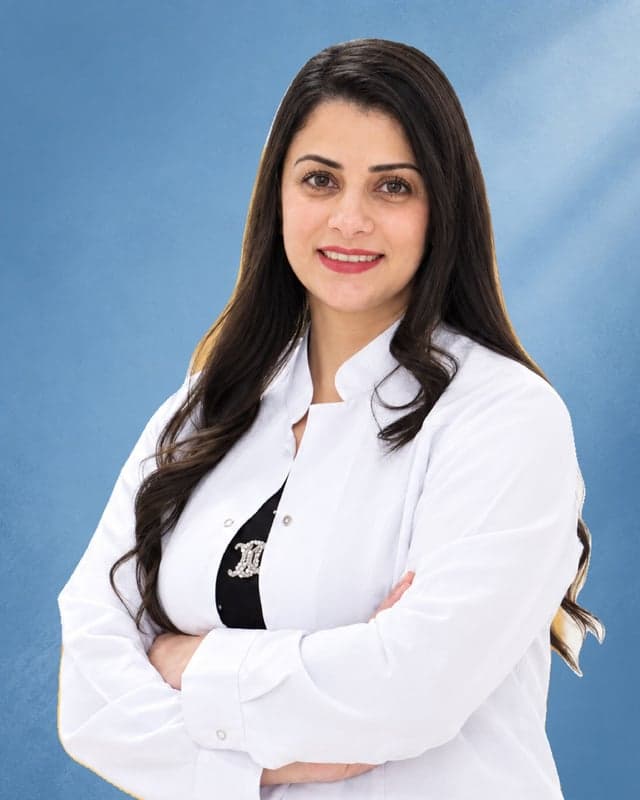 Dr. Shatha Abo MoghdebBook appointment
General Practitioner, Pediatrics
Medically reviewed by Dar Al Kamal Team
What does a pediatrician do?
A pediatrician is a doctor trained specifically in the health of children. Children are not small adults — they present differently, deteriorate faster, recover faster, and need doses, equipment and communication suited to their age.
Pediatric care covers three things: treating illness, preventing it through vaccination and screening, and monitoring that a child is growing and developing as expected.
When should you bring your child to a pediatrician?
Bring your child for fever, particularly in infants under three months, persistent cough or breathing difficulty, vomiting or diarrhoea with signs of dehydration, rashes, ear pain, feeding difficulties, poor weight gain, or concerns about development, speech or behaviour.
Seek emergency care immediately if your child has difficulty breathing, is unusually drowsy or difficult to wake, has a rash that does not fade when pressed with a glass, is having a seizure, shows signs of severe dehydration, or if you simply feel something is seriously wrong. A parent's instinct about their own child is clinically meaningful and should not be dismissed — including by you.
Is it an emergency, or can it wait for the clinic?
Parents frequently agonise over this. As a general guide: breathing difficulty, drowsiness, seizures, a non-blanching rash, severe dehydration or a fever in a baby under three months need emergency assessment now. Fever with a child who is still drinking and interacting, an ear ache, a rash without other symptoms, or a cough without breathing difficulty can usually wait for a clinic appointment.
If you are unsure, call 06 599 7777. Asking is always reasonable.
Newborn care
The first weeks are the most intensive period of a child's medical life. Newborn care covers feeding, weight monitoring, jaundice, the umbilical stump, sleep and routine newborn screening.
It also covers the parents. Feeding difficulties and exhaustion are medical issues, not personal failures, and both are addressable. If breastfeeding is not working, that is a problem with a solution, not a verdict.
Weight is monitored closely in the early weeks. Some initial weight loss is normal; the pattern of recovery is what matters.
Vaccination
Vaccination is the single most effective preventive measure in child health. The UAE national immunisation schedule protects against diseases that were common causes of childhood death within living memory.
Your pediatrician keeps your child's schedule on track and can advise on catch-up if you have moved from another country with a different schedule — a very common situation here. Bring whatever records you have, in whatever language.
Mild fever or irritability for a day or two after vaccination is normal and expected. Your pediatrician will tell you what is not.
Growth and development
Growth is tracked against standard charts — height, weight and head circumference. A single measurement says little; the pattern over time says a great deal.
Developmental milestones cover movement, speech, social interaction and learning. There is a wide normal range, and children reach milestones at different rates. Bilingual and trilingual households are common here, and children raised with multiple languages sometimes speak later while understanding normally — this is usually not a cause for concern, but it is worth discussing rather than worrying about silently.
If you have a concern, raise it rather than waiting. Early assessment for conditions such as autism spectrum disorder or ADHD leads to earlier support, and earlier support changes outcomes measurably.
Common childhood illness
Most childhood illness is viral, self-limiting, and needs comfort rather than antibiotics. Knowing which is which is the pediatrician's job, and being told your child does not need antibiotics is a clinical decision, not a brush-off.
Respiratory infections, ear infections, gastroenteritis and skin conditions make up the bulk of pediatric visits. Children in nursery or school catch infections frequently — a run of illnesses in the first year of nursery is normal and not a sign of a weak immune system.
Asthma and allergy
Childhood asthma and allergy are common in the UAE. Dust, sand, air quality and long hours in air conditioning all contribute. Both are manageable, but both need a written plan rather than reactive treatment — what to give daily, what to give in a flare-up, and when to seek help.
Feeding, nutrition and sleep
Fussy eating, weaning, portion sizes and sleep problems are among the most common reasons parents seek help, and among the most under-asked. They are core pediatric concerns, not trivial questions. Ask them.
Chronic conditions
Children with asthma, diabetes, epilepsy or other ongoing conditions benefit from consistent care with the same clinician where possible, so that changes over time are noticed by someone who knows the child.
School health
School health checks cover vision, hearing, growth and vaccination status. Vision and hearing problems are frequently picked up here rather than at home, because a child who has always seen or heard a certain way has no reason to report it.
Dehydration in children
Dehydration is a common reason a mild childhood illness becomes serious, and it can develop quickly in babies and toddlers with vomiting or diarrhoea. Watch for fewer wet nappies than usual, a dry mouth, no tears when crying, sunken eyes, unusual drowsiness, or a young baby who will not feed. Offer small amounts of fluid often rather than a large drink at once, as small sips are kept down more easily.
Seek same-day care if your child cannot keep any fluid down, is passing very little urine, or is becoming floppy or hard to rouse. Treated early, dehydration is usually straightforward.
What happens at a pediatric appointment?
Your pediatrician takes a history from you — the person who knows the child best — examines your child gently, and explains what is going on and what to do. Children are often examined on a parent's lap, and there is no expectation that a young child will sit still. You will leave with a plan, and an answer to the question worth asking: what should make you bring your child back sooner.
Why might your child be asked to come back?
Pediatrics cannot promise a diagnosis at the first visit. Many childhood illnesses look similar in their early hours, and sometimes the safest answer is to treat the symptoms, tell you which warning signs to watch for, and review your child again if things change. Being asked to come back is part of careful care, not a sign something was missed.
Cost and insurance
Most UAE plans cover pediatric consultation and routine vaccination, though coverage of optional vaccines varies. Contact us on 06 599 7777 to check your policy before your visit.
Conditions treated
- Fever and infection
- Respiratory infections
- Childhood asthma
- Allergies
- Gastroenteritis
- Ear infections
- Skin conditions
- Growth and feeding difficulties
- Developmental concerns
- Childhood diabetes
- Epilepsy
- ADHD and behavioural concerns
Services in this department
News and events


Frequently asked questions
Up to what age do you treat children?
Pediatrics at Dar Al Kamal Hospital cares for children from birth up to the age of 14. Newborn care is included from the first days of life, covering feeding support, jaundice monitoring and newborn screening.
My child has a fever — when should I worry?
Any fever in a baby under three months needs same-day assessment. In older children, behaviour matters more than the number: a child drinking, alert and interactive is usually less concerning than one unusually drowsy or refusing fluids, whatever the thermometer says.
Do you follow the UAE vaccination schedule?
Yes. We can also advise on catch-up vaccination if your child's schedule started in another country.
My child was born abroad — can you continue their care?
Yes. Bring any vaccination records, growth charts and medical notes you have, in any language.
Can I ask about behaviour and sleep, not just illness?
Yes, and you should. Sleep, feeding, behaviour and development are core pediatric concerns, not side questions.
My child keeps getting sick since starting nursery — is something wrong?
Usually not. Frequent minor infections in the first year of nursery or school are normal. Tell us if the infections are severe, unusually prolonged, or your child is not growing normally between them.
Does my child need antibiotics?
Most childhood infections are viral, and antibiotics do not help viruses. Your pediatrician will explain when they are needed and when they would do more harm than good.
My child speaks later than others — should I be concerned?
Possibly not, particularly in multilingual households. But raise it rather than waiting. Assessment is straightforward and reassurance is worth having.
How do I know if my child is dehydrated?
Fewer wet nappies than usual, a dry mouth, no tears when crying, sunken eyes and unusual drowsiness are the key signs. Offer fluids in small frequent sips, and seek same-day care if your child cannot keep any fluid down or is becoming floppy and hard to wake.
My child had a mild reaction after a vaccine — is that normal?
Mild fever, irritability or soreness at the injection site for a day or two is normal and expected after vaccination. Contact us if the fever is high, lasts more than a couple of days, or your child seems unusually unwell, so we can check.
Can I bring my child for a check-up when they are not ill?
Yes. Growth reviews, developmental checks, feeding and sleep advice, and vaccination are all reasons to visit when your child is perfectly well, and these visits are a core part of pediatric care.
Do you offer support for breastfeeding and feeding problems?
Yes. Feeding difficulties, weaning questions and concerns about weight gain are medical matters we help with, not personal failures, and most have practical solutions.
Book an appointment
Tell us your preferred day and time. Our team calls you back to confirm.