

Maternity Hospital in Sharjah
Specialists
 Dr. Ahmad KhattabBook appointment
Consultant Obstetrician & Gynecologist
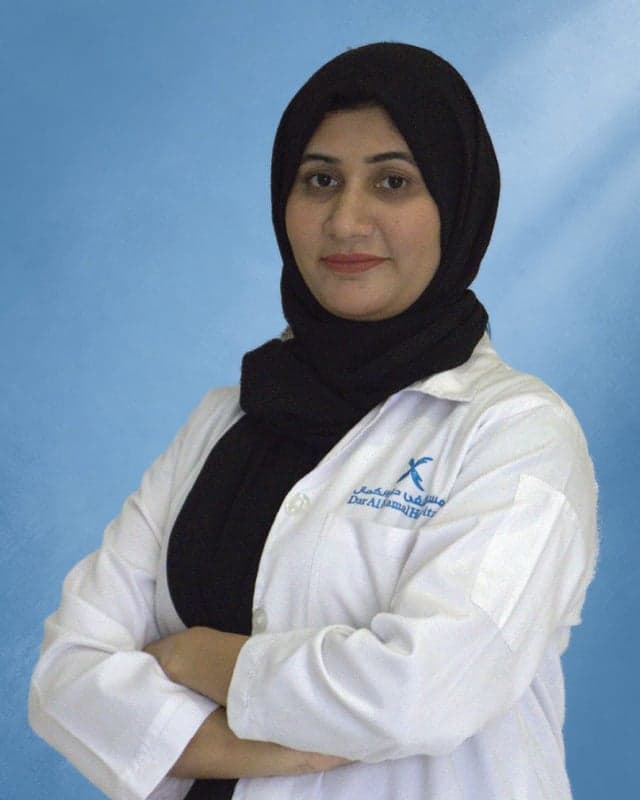 Dr. Asmat TahiraBook appointment
General Practitioner, Obstetrics & Gynecology
 Dr. Aysha KhudijaBook appointment
Specialist Obstetrician & Gynecologist
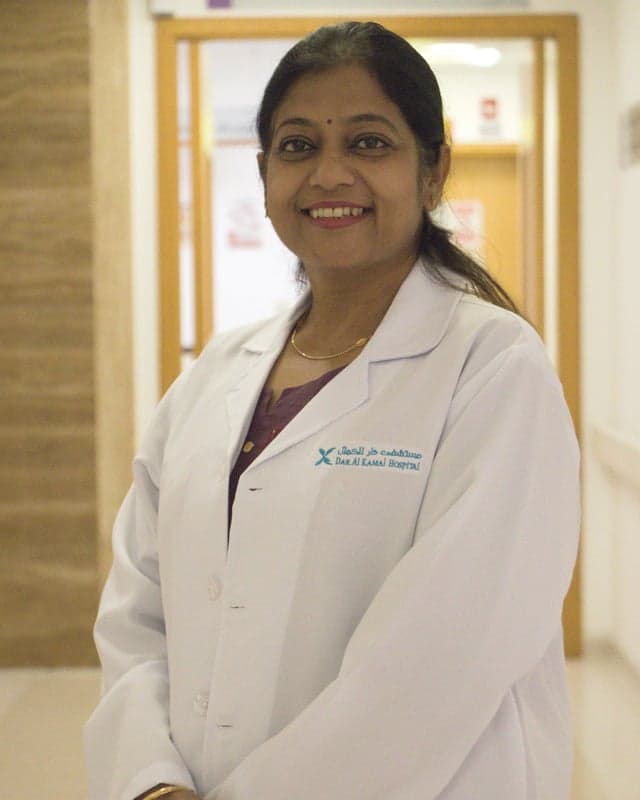 Dr. Kakoli Sen GuhaBook appointment
Specialist Obstetrics and Gynecology
 Dr. Marou JidouriBook appointment
GP - Obstetrics & Gynecology
 Dr. Mohammad TehraniBook appointment
Specialist Pediatrics & Neonatologist
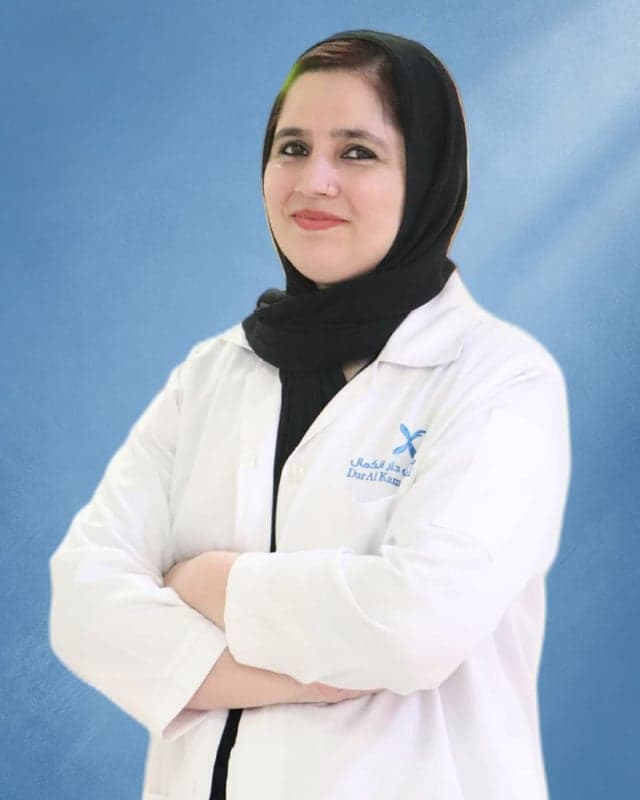 Dr. Nusrat Barkat ShahBook appointment
GP - Obstetrics & Gynecology
 Dr. Rehab HammoudBook appointment
GP - Obstetrics & Gynecology
 Dr. Sanaa Hasan Oleiwi Al AbbasiBook appointment
Consultant Obstetrics/Gynaecology
 Dr. Tahrir AbbasBook appointment
Consultant Obstetrician & Gynecologist
 Dr. Zeinab MohamedkhairBook appointment
Specialist Obstetrics and Gynecology
Medically reviewed by Dar Al Kamal Team
What a maternity hospital provides
A maternity hospital is where you are cared for during pregnancy and where you give birth. That is different from seeing a gynaecologist, which is a consultation for a specific concern. At Dar Al Kamal Hospital the two work together — the same obstetric team that manages a pregnancy is the team present for the birth — but the search most expectant parents are making is a practical one: where will I have my baby, and who will look after me there.
Maternity care at Dar Al Kamal Hospital covers the whole journey. It begins with antenatal appointments that track your health and your baby's growth, continues through labour and birth, and carries on for the first days afterward while you and your baby are found to be well before you go home.
Antenatal care — your pregnancy check-ups
Antenatal care is the schedule of appointments that runs through pregnancy. The purpose is straightforward: to confirm your baby is growing well, to check your own health, and to catch the conditions that are far easier to manage early than late.
A typical pattern is more frequent visits as you approach your due date. Appointments include blood pressure and urine checks, measuring the growth of the bump, listening to the baby's heartbeat, and the ultrasound scans that confirm dates, check development and locate the placenta. Blood tests screen for anaemia, blood group and infections that matter in pregnancy.
Two conditions are looked for at every visit because they are common here and treatable when found early. Gestational diabetes — raised blood sugar that appears in pregnancy — is screened for with a glucose test, and is more common in this population than in many others. Pre-eclampsia, a blood-pressure condition, is the reason your blood pressure and urine are checked every single time. Neither has reliable symptoms in the early stages, which is exactly why the routine checks matter.
When should you come to the hospital in pregnancy?
Contact the hospital or come in if you notice any of these:
- Vaginal bleeding at any stage of pregnancy
- A noticeable reduction in your baby's movements, or a change in the usual pattern
- Your waters breaking, whether or not contractions have started
- Regular, strengthening contractions
- A severe or persistent headache, or sudden swelling of the face and hands
- Blurred vision or seeing flashing spots
- A high temperature, or burning when passing urine
- Persistent, severe abdominal pain
Reduced fetal movement is the one that is most often left overnight, and it should not be. If your baby is moving less than usual, it is always worth a call the same day rather than waiting for your next appointment.
When is it an emergency?
Call an ambulance or go straight to the emergency department if you have heavy vaginal bleeding, constant severe abdominal pain, a fit or seizure, a severe headache with blurred vision, or you cannot feel your baby moving at all. These need to be seen immediately, not at your next scheduled visit.
In late pregnancy, a severe headache with visual changes and upper-abdominal pain can signal a dangerous rise in blood pressure. It is one of the situations where hours matter, and it is better to be assessed and reassured than to wait at home.
Labour and birth
Most births are vaginal, and for a straightforward pregnancy that is what the team plans for and supports. During labour you and your baby are monitored, your progress is checked, and pain relief is available and discussed with you as things move along.
Pain relief in labour ranges from breathing and position, through gas and injectable options, to an epidural. There is no single right choice. What suits one woman does not suit another, and a plan made in advance can change once labour is underway. Your midwife and obstetrician will talk you through what is available and what each option involves so the decision is yours and informed.
Sometimes a birth that starts vaginally needs help to finish — an assisted birth using instruments, or a caesarean. This is not a failure of anything. It is a judgement made in the moment about the safest way for a particular baby to be born, and it is explained to you as it happens.
Caesarean birth
A caesarean is the birth of a baby through an operation on the abdomen. Some are planned in advance for medical reasons; others are decided during labour when a vaginal birth is not the safer path.
A caesarean is major surgery, and recovery takes longer than after a vaginal birth. Your obstetric team will give you a realistic picture of what to expect for your own situation rather than a fixed timeline, because it varies from woman to woman. Caesarean birth is coordinated with the anaesthetic team, who will discuss the type of anaesthetic with you beforehand.
Higher-risk pregnancies
Some pregnancies need closer attention — an existing condition such as diabetes, high blood pressure or a thyroid problem, a multiple pregnancy, a previous caesarean or pregnancy complication, or a concern that appears along the way. Higher-risk does not mean something will go wrong. It means the pregnancy is watched more closely and other specialists are involved where useful.
Where a medical condition overlaps with your pregnancy, the obstetric team coordinates with the relevant department rather than leaving you to carry information between them.
After the birth — you and your baby
The first days after birth are when both of you are checked to be well. For you, that means recovery, feeding support, and advice on what is normal and what should prompt a call once you are home. For your baby, it means the newborn checks and the care of the neonatal team if a baby needs extra help — early or small babies, feeding difficulties, or jaundice that needs treatment.
How long you stay after the birth depends on how you and your baby are doing and on the type of birth. Before you go home, the team goes through your own recovery, your feeding plan, and the newborn signs — feeding, breathing, colour and temperature — that should prompt you to call or bring your baby back to be seen.
Feeding support matters more than most people expect. Breastfeeding is common to find difficult in the first days, and practical help early makes a real difference. Ask for it — it is part of what the team is there for.
Your birth plan and choices
A birth plan is a useful way to think through what you would prefer — pain relief, who is with you, feeding. Write one, and share it with your team. Hold it loosely, though. Birth is one of the least predictable things in medicine, and the plans that serve women best are the ones that state their preferences clearly while accepting that the safest route on the day is decided on the day.
Cost and insurance
Maternity is handled differently by insurers than most care. Many UAE plans cover antenatal care and delivery, but coverage often depends on the length of the policy, and some plans apply a waiting period before maternity benefits begin. Pre-approval is commonly required for delivery, and a planned caesarean may need it separately. Sort this out early in the pregnancy rather than close to your due date — contact us on 06 599 7777 to confirm what your plan includes.
Conditions treated
- Routine and low-risk pregnancy
- Gestational diabetes
- Pre-eclampsia and high blood pressure in pregnancy
- Multiple pregnancy (twins or more)
- Pregnancy after a previous caesarean
- Reduced fetal movements
- Bleeding in pregnancy
- Anaemia in pregnancy
- Breech and other positions
- Preterm labour
- Prolonged or stalled labour
- Postnatal recovery and complications
- Breastfeeding and feeding difficulties
- Newborn jaundice and feeding problems
Services in this department
Frequently asked questions
Do I need a referral to book maternity care?
No. You can book an appointment directly. Bring any scans, blood results or notes from earlier in your pregnancy or from a previous birth if you have them.
When should I first come in if I think I am pregnant?
Early — ideally in the first weeks. An early visit confirms the pregnancy, dates it accurately, and starts the checks and supplements that matter most in the first trimester.
Can I choose between a normal birth and a caesarean?
Your preferences are central to the discussion, and you should raise them early. The final recommendation balances what you want with what is safest for you and your baby in your specific situation, which your obstetrician will explain rather than decide for you.
What pain relief is available during labour?
A range, from breathing and movement to gas, injectable pain relief and an epidural. Each has trade-offs your team will explain, and you can change your mind during labour. There is no single correct choice.
What happens if my baby needs extra care after birth?
Newborns who need help — those born early or small, or with feeding difficulty or jaundice — are cared for by the neonatal team. Your baby stays close to that care, and you are kept informed and involved throughout.
How often will I have antenatal appointments?
Appointments are spaced further apart early in pregnancy and become more frequent as your due date approaches. The exact schedule depends on your health and whether your pregnancy needs closer monitoring.
Is gestational diabetes serious?
It needs attention, but it is manageable. Most cases are controlled with diet and monitoring, and the point of screening every pregnancy is to find it early so it can be managed before it affects you or your baby.
What should I bring to the hospital for the birth?
Your Emirates ID and insurance card, your pregnancy notes and scan reports, and a bag for yourself and the baby. Ask at a late antenatal visit for a checklist so nothing is left to the last minute.
Can my partner be with me during the birth?
Yes, a birth partner is welcome to support you. Let the team know your wishes in advance so they can be accommodated as your labour allows.
I have diabetes already — can I still be looked after here?
Yes. An existing condition means your pregnancy is watched more closely and the obstetric team coordinates with the relevant specialists. It is a reason for closer care, not a barrier to it.
Is maternity care covered by insurance?
Many UAE plans cover it, but maternity often carries waiting periods and pre-approval requirements that other care does not. Check your policy early in the pregnancy — contact us on 06 599 7777 and we will help you confirm what is included.
Book an appointment
Tell us your preferred day and time. Our team calls you back to confirm.